
Simple controls on the front.
The documented concept combines an OLED display, a round dial and a lower sample area. The intention is to make the interaction understandable without exposing the complexity of the optical experiment.
A research prototype exploring how near-infrared and visible-light sensing can support rapid, non-destructive qualitative screening of fruits and vegetables.
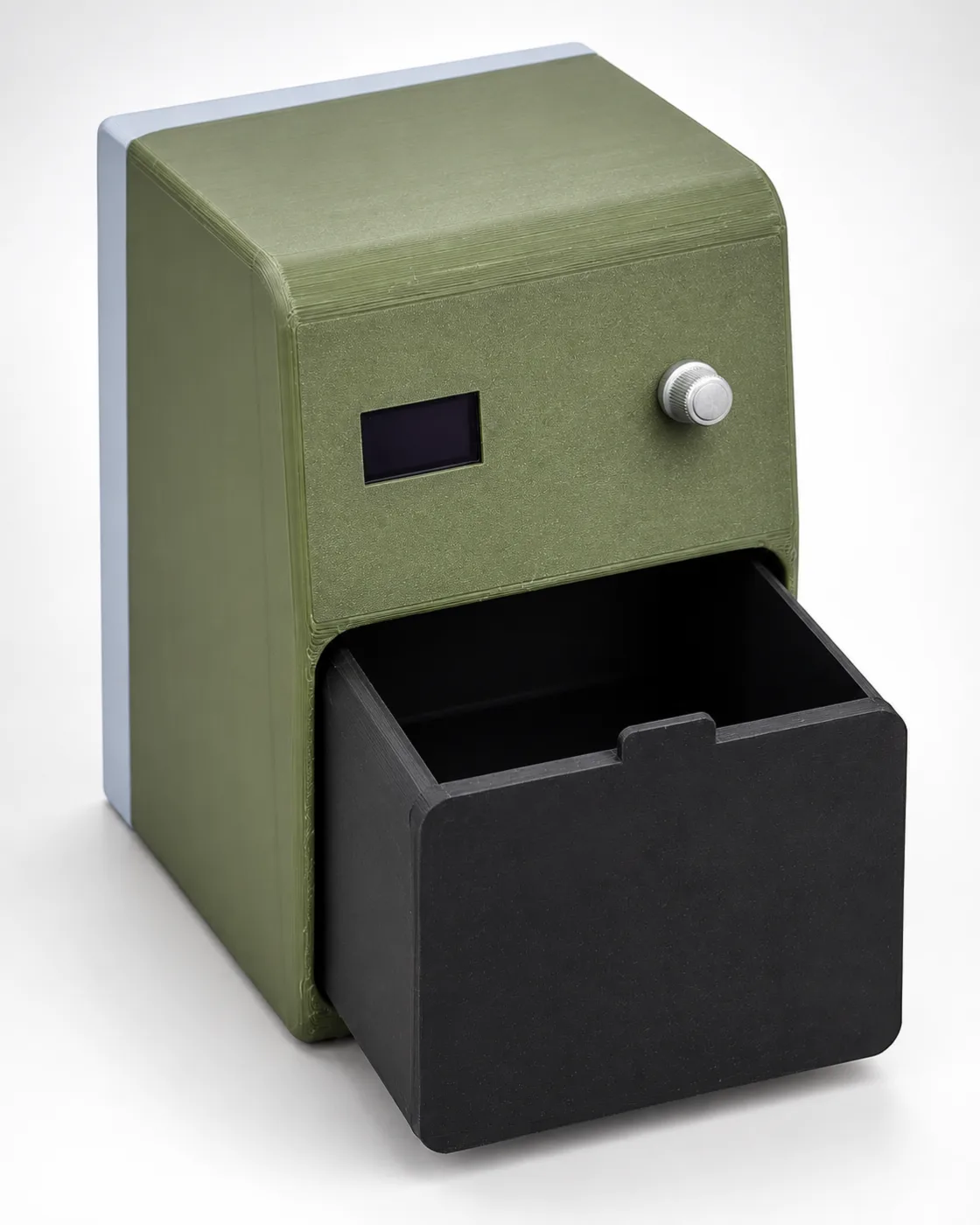
On larger screens, the product view changes as you move through each part of the workflow. On phones, the same views are presented as a lightweight swipe gallery for smoother performance.
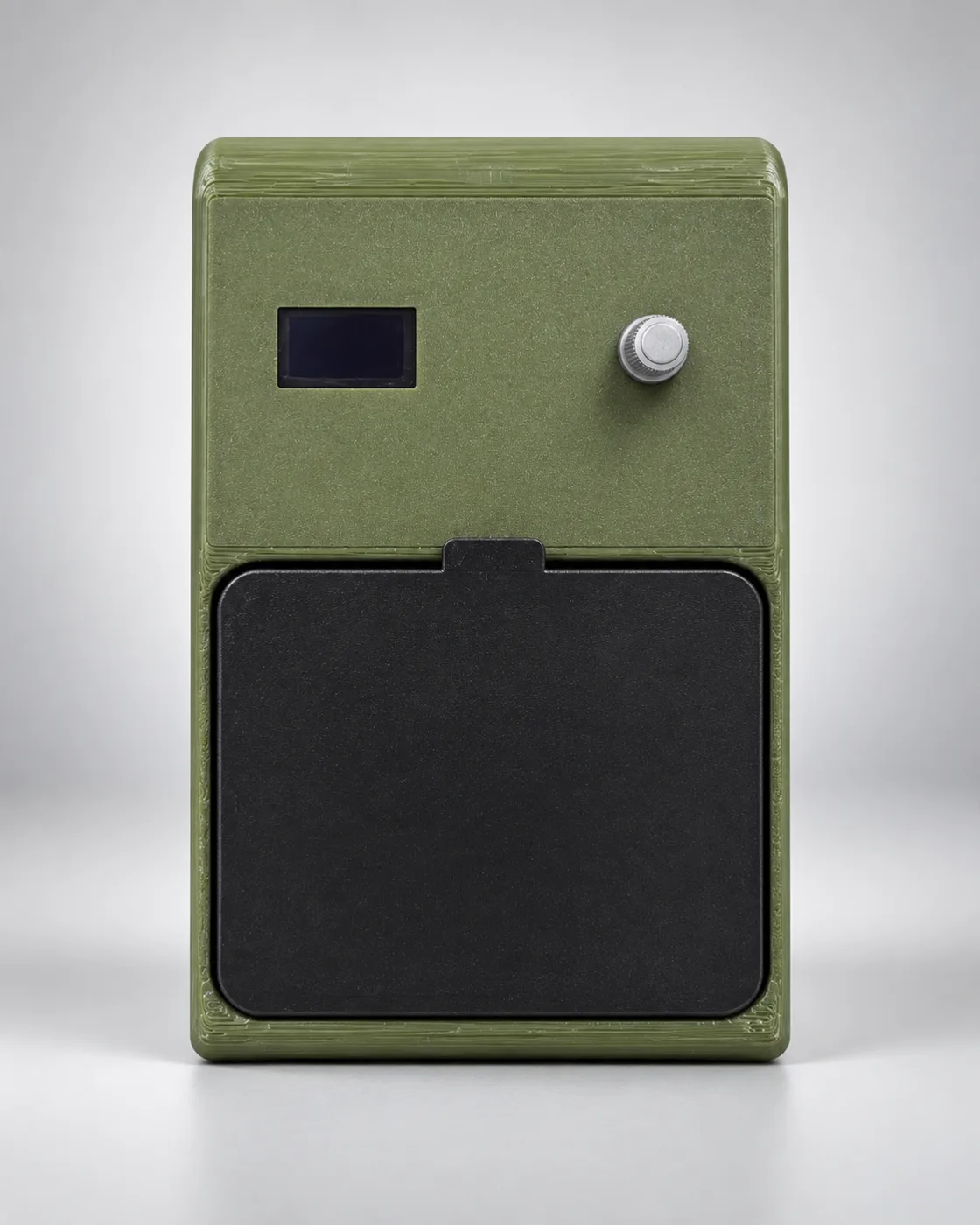
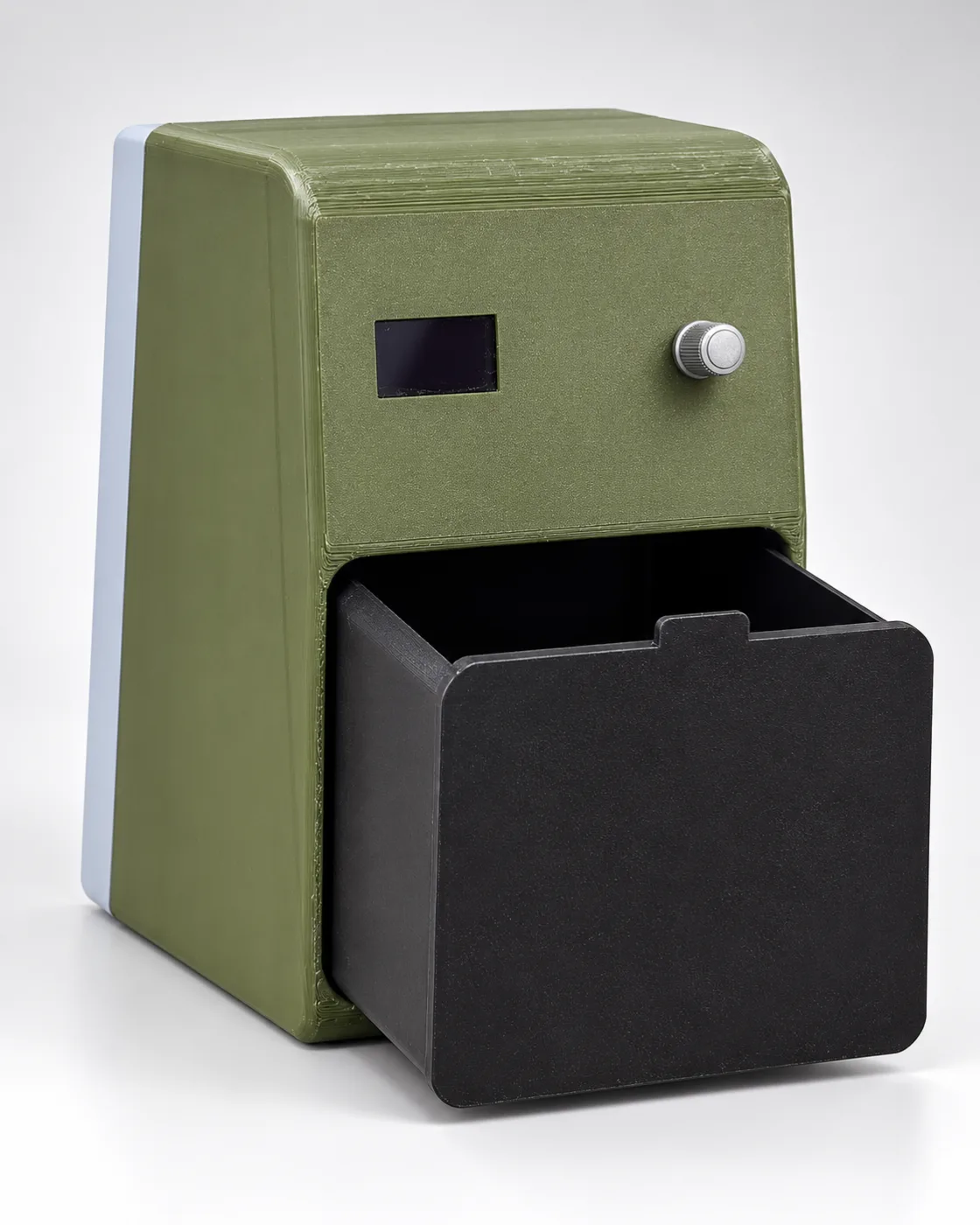
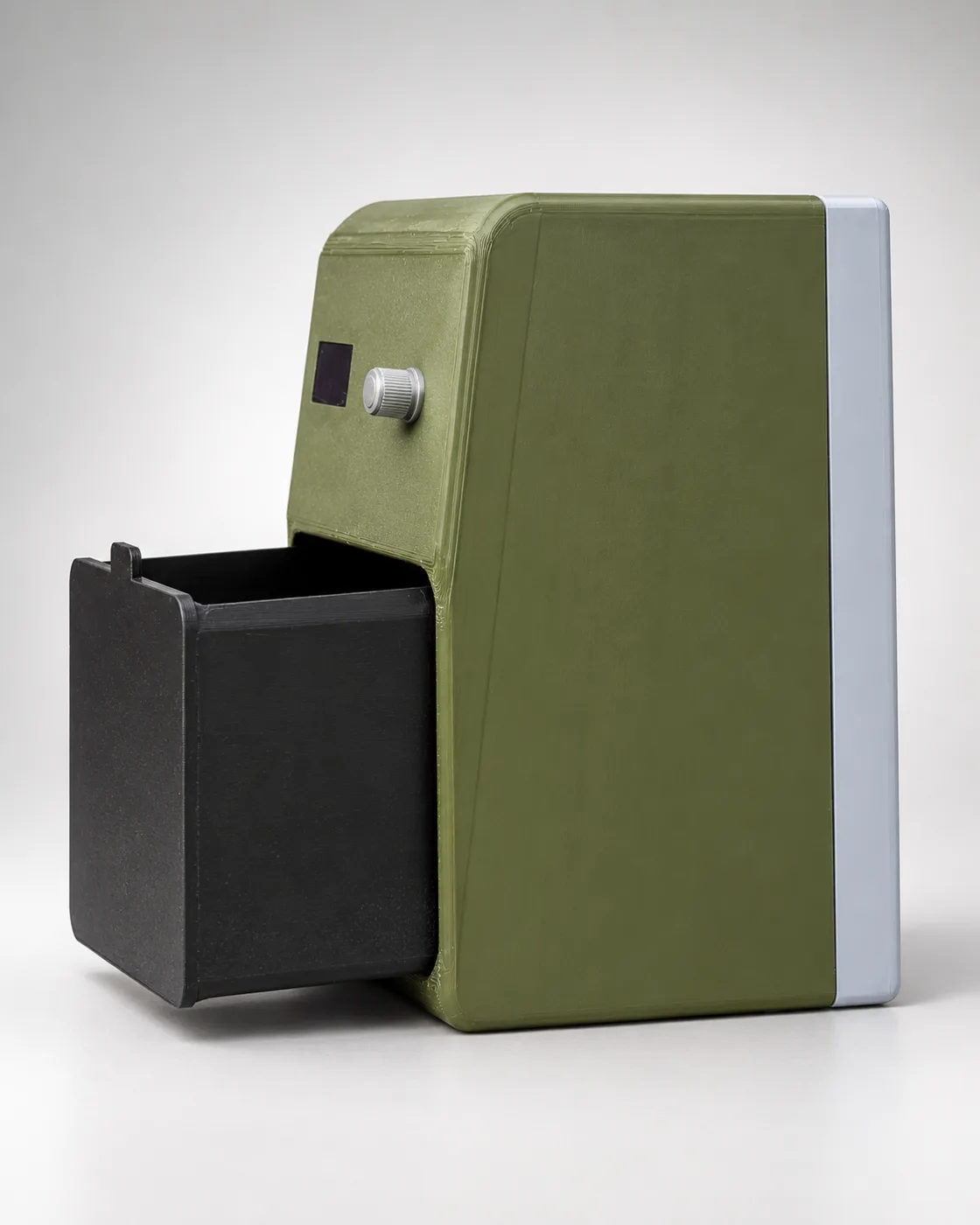
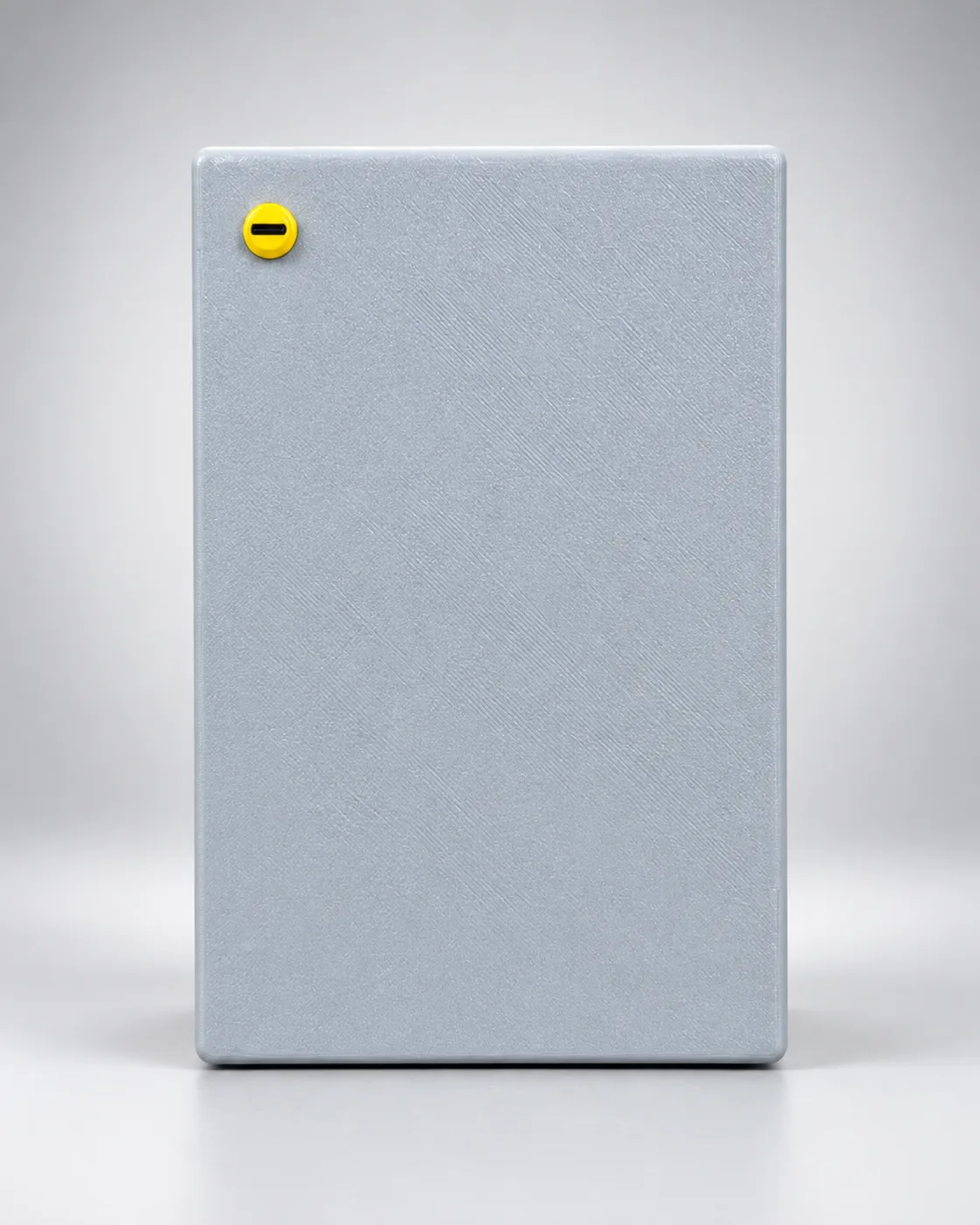
The documented concept combines an OLED display, a round dial and a lower sample area. The intention is to make the interaction understandable without exposing the complexity of the optical experiment.
The prototype uses a lower drawer/compartment so fruit or vegetable samples can be positioned more consistently relative to the sensing setup.
The submitted project material describes NIR and visible spectroscopy and notes that materials can absorb and reflect different wavelengths differently.
Earlier work used NIR and red values, including an NDVI-inspired relationship, as part of the qualitative analysis. Broader calibration and reference validation remain part of the development path.
The project roadmap includes improved accuracy, miniaturization, cloud and AI integration, durability, manufacturing partnerships and distribution.
PRODUCT ANATOMY
Intended to provide sample-selection feedback and an easy-to-understand qualitative result.
The documented future concept uses the dial to select sample type and apply the relevant threshold or profile.
Helps create a repeatable physical relationship between the sample and sensing area.
Uses NIR and visible red illumination with a receiver to study reflected response from the sample.
The original research problem focuses on pesticide residues and other harmful chemicals in fruits and vegetables, and on the lack of convenient screening tools for everyday or point-of-use contexts.
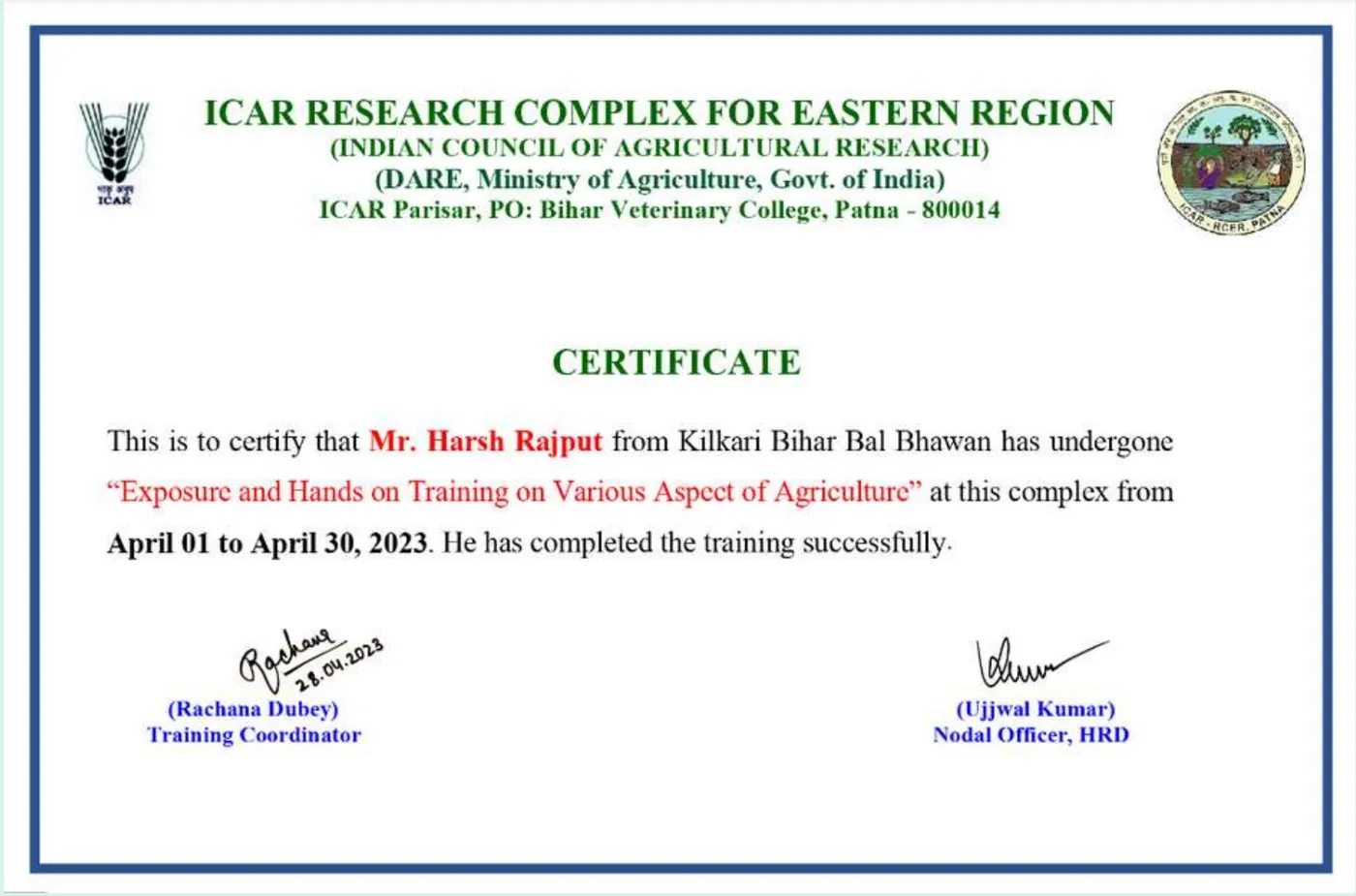
Problem statement ↗The source material documents CAD development, electronics, experiments, research training at ICAR-RCER and public project presentations. It does not establish equivalence to accredited laboratory pesticide-residue testing.
These photographs show the current physical enclosure from multiple angles.
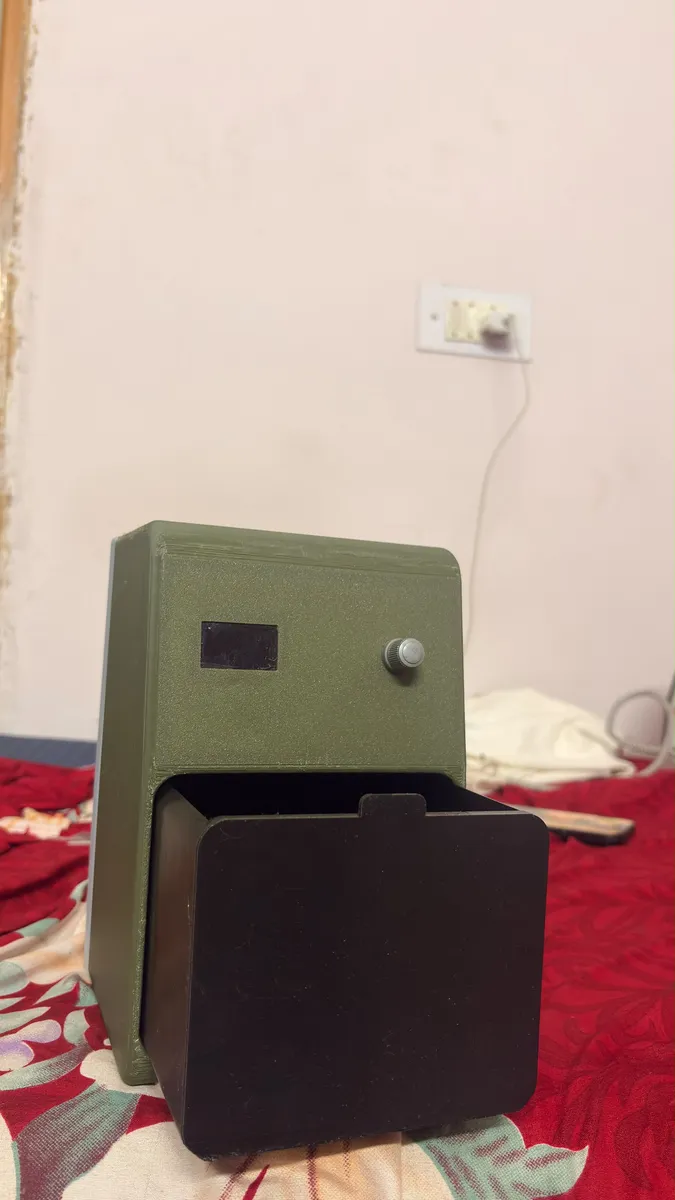
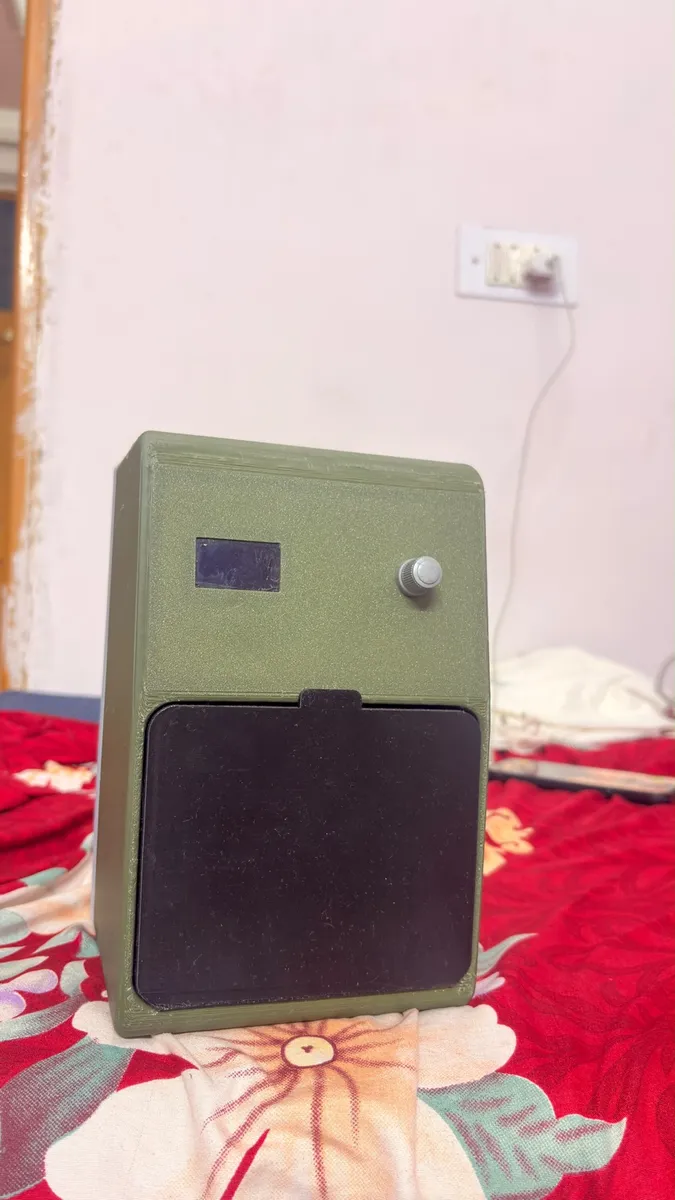
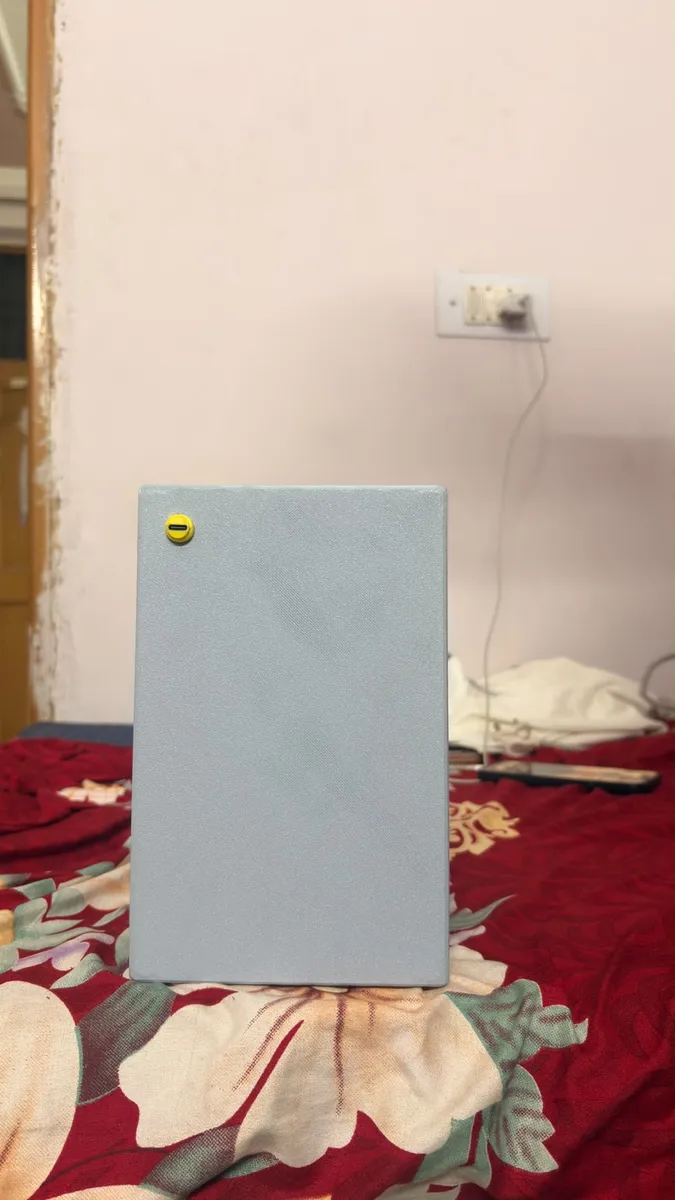
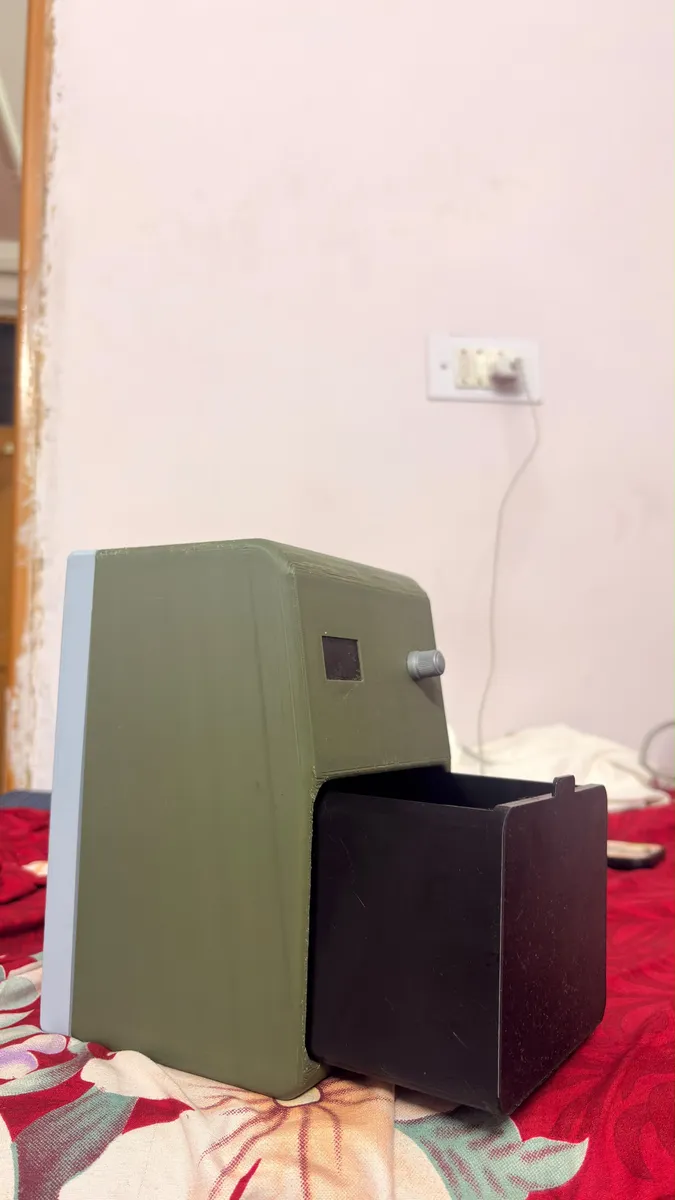
The submitted project profile documents funding/design-fabrication/R&D support from Bihar Bal Bhawan Kilkari (Department of Education, Government of Bihar) and trial/research/training support from ICAR-RCER. The next stage is open to investment, validation, manufacturing and deployment partnerships.
Discuss partnership ↗