Illuminate
Near-infrared and visible red light are directed toward the fruit or vegetable sample inside the sensing area.
The device journey combines visible and near-infrared sensing, embedded electronics, optical measurement, calibration experiments and physical prototyping. This page separates the documented method from the work that still remains.
The project documentation describes a combination of near-infrared and visible spectroscopy. Different materials can absorb, transmit and reflect electromagnetic radiation differently across wavelengths, creating a measurable optical response.
Near-infrared and visible red light are directed toward the fruit or vegetable sample inside the sensing area.
An optical receiver measures the reflected response. Earlier prototypes referenced LDR / photodiode-style sensing components.
Research values are compared using an NDVI-inspired relationship between NIR and red response, alongside sample-specific thresholds and calibration work.
The interface is intended to translate the measured signal into a simple qualitative output that a non-specialist can understand.
The source material documents a research prototype and early experiments. A dependable commercial claim about specific pesticide residues would require controlled calibration against reference chemistry, larger datasets, repeatability testing, sensitivity/specificity analysis and validation across produce types and real-world conditions.
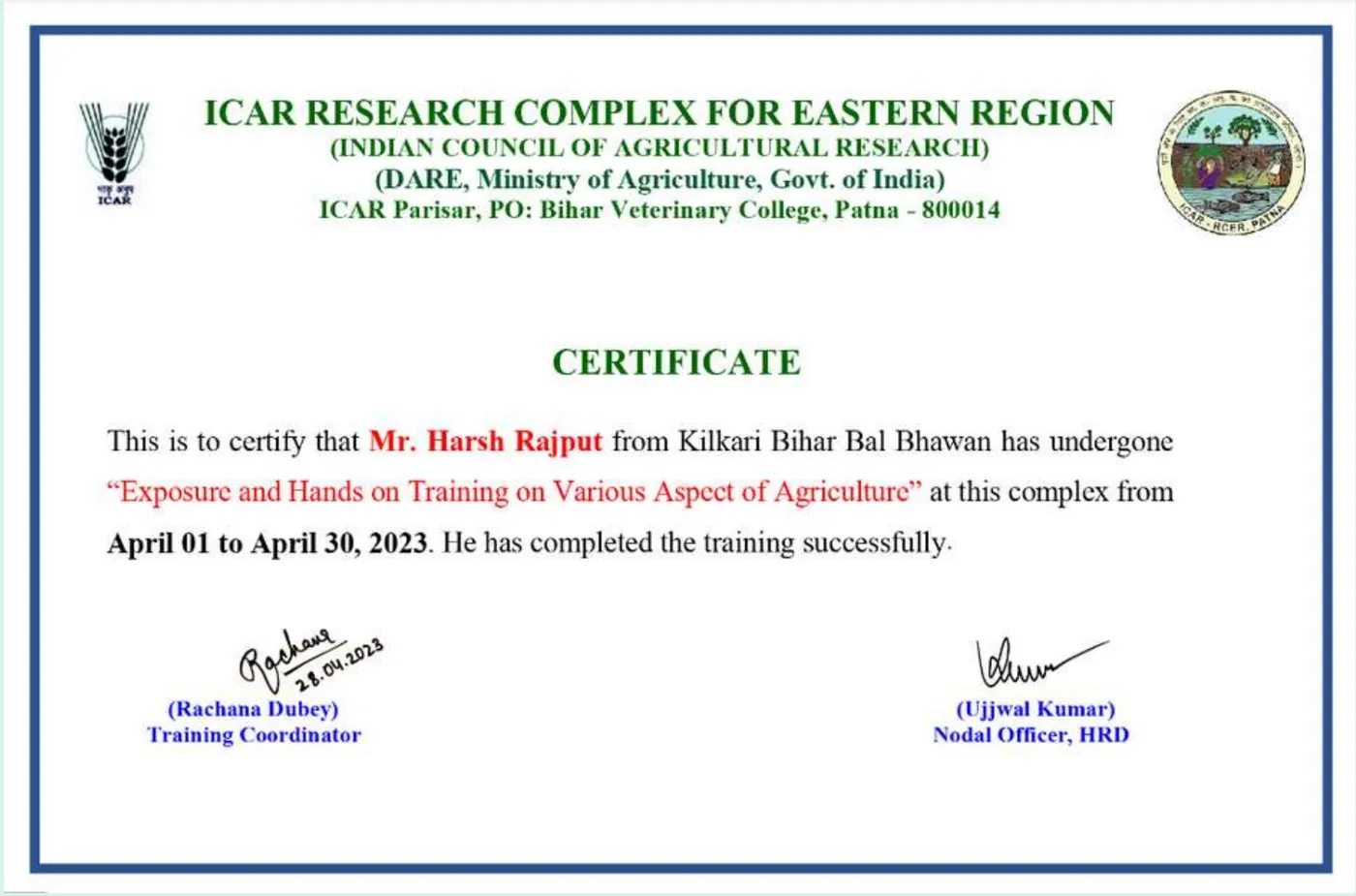
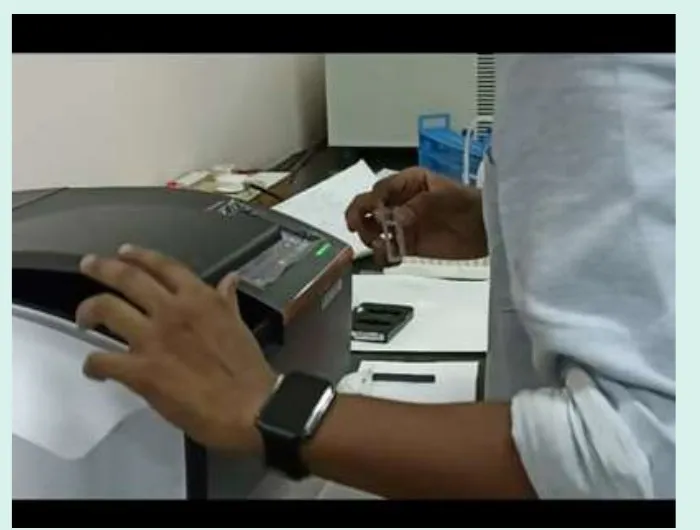
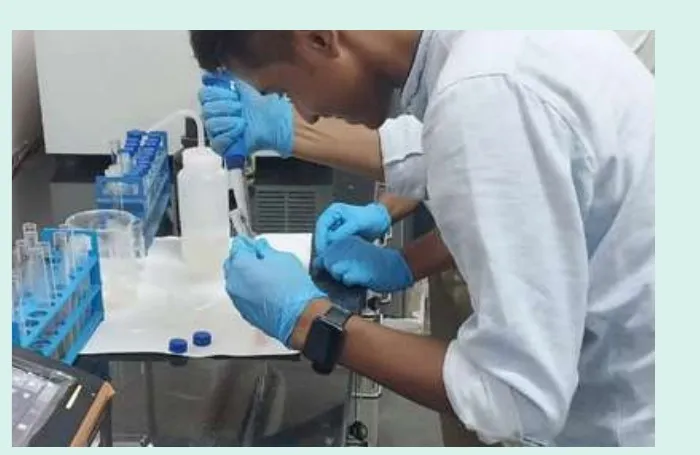
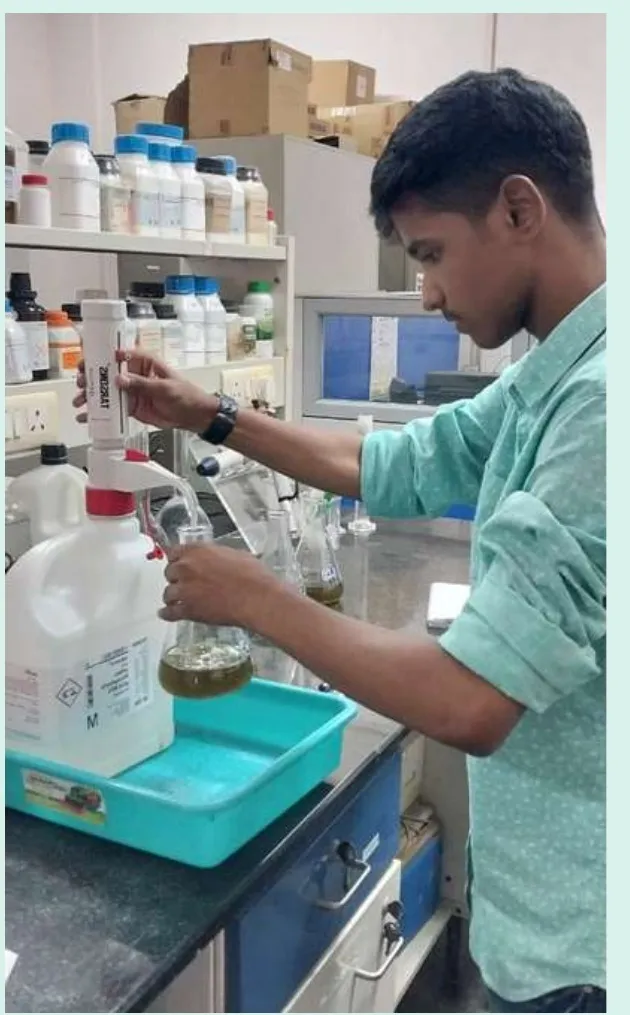
The project deck includes a certificate and laboratory photographs from hands-on agricultural training at the ICAR Research Complex for Eastern Region in 2023.
The project poster states that the tested samples showed a positive relationship between its NDVI parameter and pesticide concentration in the experiments shown. It also describes using NDVI values to compare internal quality characteristics across samples.
Because the poster does not provide a full validation dataset, statistical methodology, reference-chemistry protocol or independent replication, this website treats those results as early project findings rather than a clinically or regulatorily established performance claim.
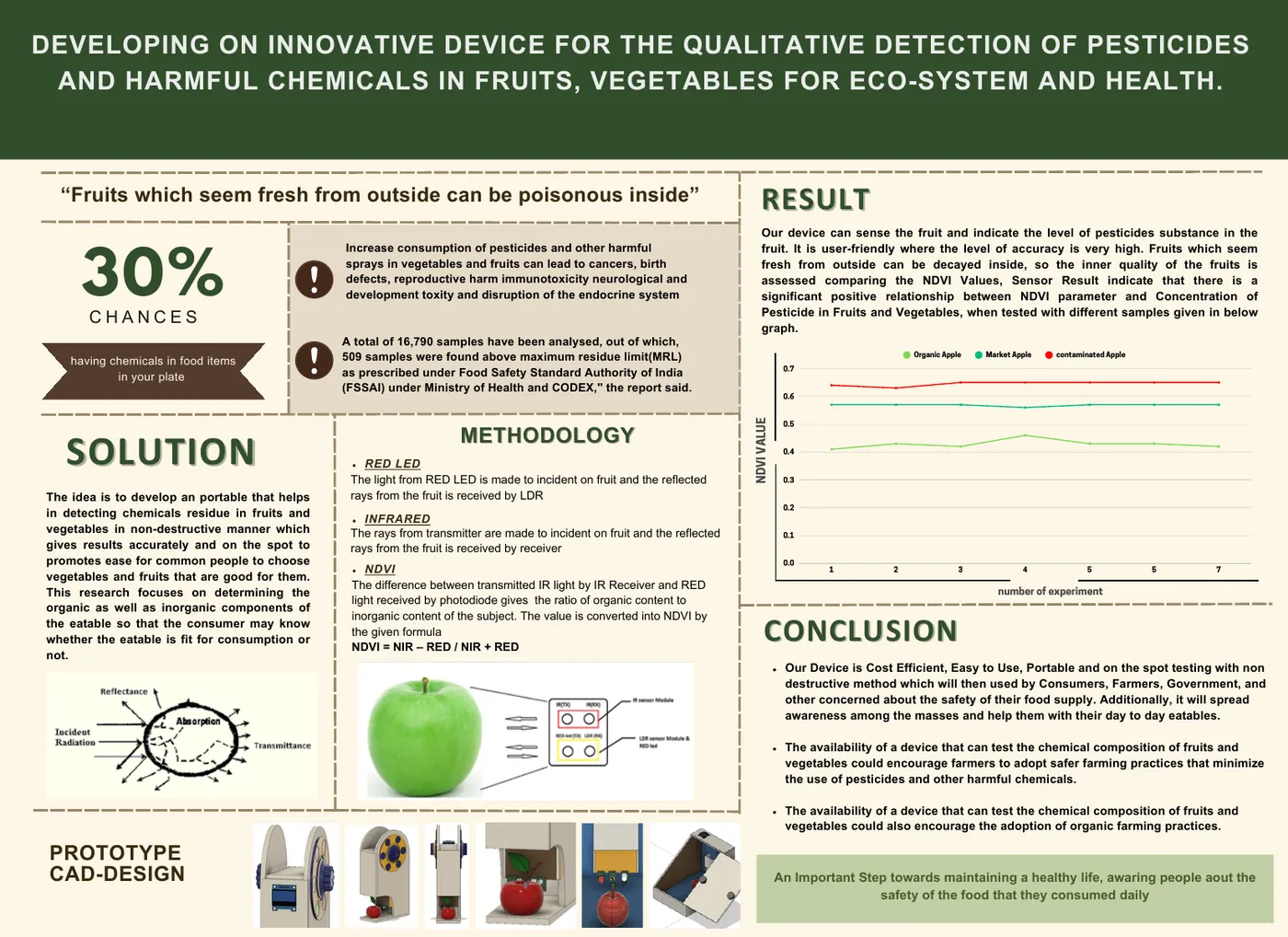 View original poster ↗
The project deck describes GC as a gold-standard laboratory approach for pesticide residue analysis, requiring sophisticated instruments, trained technicians and time-intensive workflows.
Role: reference analytical testingNIR and related spectroscopy platforms are used in research and quality-control contexts, but general-purpose instruments are not necessarily designed for simple consumer interaction.
Role: research and quality measurementThe product direction focuses on reducing workflow complexity and turning optical measurements into a compact, guided screening experience.
Role: R&D / preliminary qualitative screeningBuild larger, cleaner datasets across produce types, residue conditions and environmental variability.
Benchmark results against reference laboratory methods and quantify performance with transparent metrics.
Reduce size and weight while preserving consistent sample placement, illumination and thermal/electrical stability.
The project roadmap proposes cloud-based storage and analysis of larger datasets to support pattern discovery and improved interpretation.
Refine components, enclosure tolerances, serviceability, durability and cost for repeatable production.
Define intended use and obtain the evidence and approvals appropriate to any future commercial claims.
The downloadable poster and project deck preserve the original project framing, methodology, business model and future plan.